
Archive Record
Images

Additional Images [17]
Metadata
Catalog number |
1997.2.2602 |
Object Name |
Newsletter |
Date |
1992 |
Description |
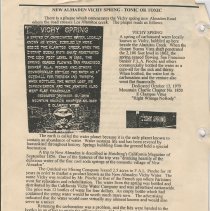
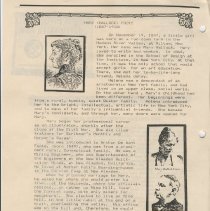
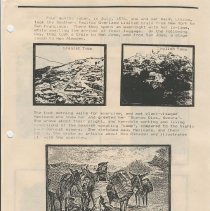
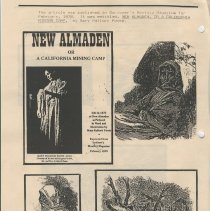
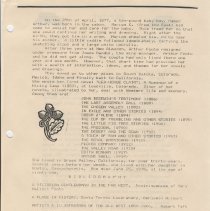
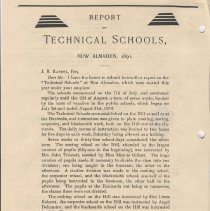
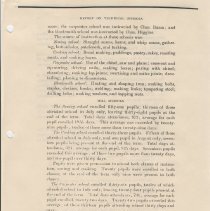
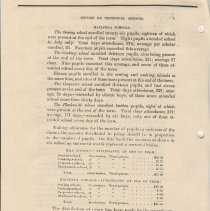
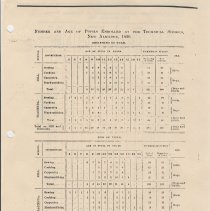
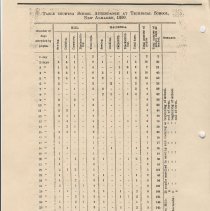
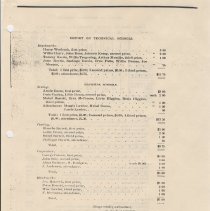
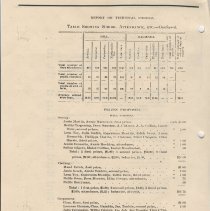
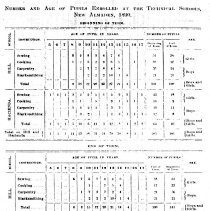
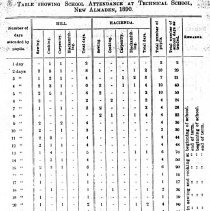
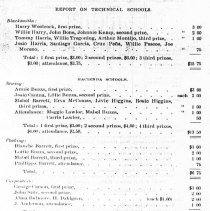
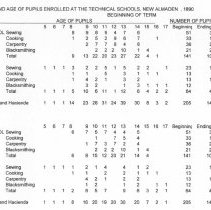
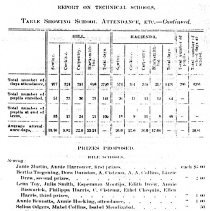
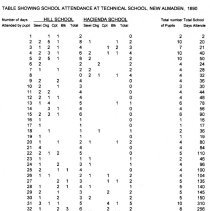
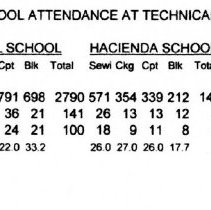
TITLE: Quicksilver County Park News SUBTITLE: Newsletter of the New Almaden Quicksilver County Park Association Issue # 30 Summer 1992 SUMMER 1992 ISSUE 30 PRESIDENT'S MESSAGE Measure A passed - through your support and vote! Now the Parks Department can purchase new lands and protect what has been purchased. We are working closely with Mid-Peninsula Open Space District to complete a joint venture in the purchase of the 900+ acres of Jacques Ridge which will form a perfect boundary along Hicks Road for the Quicksilver Park. The road from the Rotary Furnace across the western border of the park and through Jacques Ridge to Hicks Road was used by the Quicksilver Mining Company to haul lumber for the furnaces and for timbering the tunnels. The name of the supplier was Cheim Lumber Company out of Uvas Canyon. With the passage of Measure A, we might have some leverage for the purchase of Jacques Ridge. Mid-Peninsula Open Space District has graciously agreed to go ahead with the appraisal of the 900+ acres and this is in process at this time. Jimmy Schneider's book is in the last stages of camera ready for the printers. It will be on the market in November in time for Christmas. A new listing of docents for the 1992-1993 Museum year is being processed. If you can help, please call Kitty at 268-6541. Kitty Monahan Dates to Remember Sunday July 12 - S:OOAM -Sierra Club Singleaires Hike. Open to the public. Meet at the Reduction Works. Saturday July 25 - 9:OOAM - Boy Scouts hike. Open to the public. Meet at the Reduction Works. NEW ALMADEN VICHY SPRING-TONIC OR TOXIC There is a plaque which commemorates the Vichy spring near Almaden Road where the road crosses Los Alamitos creek. The plaque reads as follows: VICHY SPRING A spring of carbonated water locally known as Vichy, bubbled up here beside the Alamitos Creek. When the distant Buena Vista shaft penetrated the 2,100 foot level in 1862, the spring ceased flowing. San Francisco banker F.L.A. Pioche and others commercially bottled the water as a cure-all for the sick and thirsty. When bottled, the water lost its carbonation and the venture also went flat financial)y. Dedicated October 13, 1979 Mountain Charlie Chapter No. 1850 E Clampus Vitus "Right Wrongs NoBody" The earth is called the water planet because it is the only planet known to contain an abundance of water. Water sustains life and has been revered by humankind throughout history. Springs bubbling from the ground held a special fascination. A trip to New Almaden is described in Hutching's California Magazine of September 1856. One of the features of the trip was "drinking heartily of the delicious water of the fine cool soda springs at the romantic village of New Almaden". The Quicksilver Mining b Company leased 2.5 acres to F.A.L. Pioche for 10 years in order to market a product known as the New Almaden Vichy Water. The name Vichy was recalled by Mr. Pioche as that of the French spa where Parisians went for relaxation and rehabilitation. The water from the spring was bottled and distributed by the California Vichy Water Company and was advertised nationwide. The price was 12 bottles of water for four dollars. An empty bottle which had contained the spring water would be worth much more now. The advertising indicated that the water would cure virtually any ailment known and would also serve as a mixer. Retaining the carbonation was a problem, and the lids were banded to the bottles in an effort to retain the effervescence. It has been said that the crimped bottle cap was developed for this purpose, and when the lid was removed, a pop was heard - hence "soda pop". The water was sent from the hacienda to San Francisco where it was well received. Eventually the fizz in the water failed and the sales fell; New Almaden Vichy Spring Water became a memory. 'that was then. Now 40 feet from the monument recalling VICHY SPRING, there is a sign which states: WARNING (red letters) Contaminated fish Fish in these waters are contaminated with dangerous levels of poisonous mercury do not eat fish (red letters) .caught in these waters (red letters) by order of Santa Clara County Health Department perhaps our society is myth-guided. Richard Wachs THE CHILEAN MINERS OF NEW ALMADEN The Mexicans were not the only skilled workers to come to California and teach mining techniques to the inexperienced Americans. After hearing reports of gold, about twelve thousand Chileans, the majority of them miners, arrived in San Francisco in 1848 and '49 and made their way to the Gold Country. They were properly called "Chilenos." The Chilean experience in those primitive days was different than the experience of the Mexicans or Californios with whom they shared a common language. Unlike the others, who generally tried to avoid conflict and were willing to give up their claims when challenged by Anglos Chileans put up a fight. A South American journalist in California reported of the typical Chilean: A challenge to his rights meant death either for his attacker or himself, and even after he had been shot or stabbed he would still hold his ground That is the real reason, the only true one, why the Chileans were hated so: they were feared The very name evoked feeling of alarm. Feared or not, the Chileans (along with the Mexicans) were driven from the gold fields in the summer of 1850 and thousands returned to San Francisco to seek passage home. Some of those who remained settled in pockets that were called names like Chili camp or Chiligulch in Calaveras and Tuolumne counties, while others traveled to New Almaden and New Idria where Hispanic miners were valued. By 1860 there were eight Chilean miners at New Almaden and ten in 1870, all single men. In 1880 thirty one single men were working at the quicksilver mine while four others, R. Reyes, Juan Fierto, Manuel Anativio and Jose Enrique, had married Mexican or California women and established households. Felia Hernandez, one of only two Chilean women, married a Mexican miner named Juan and had four children. Two Chileans worked at the nearby Guadalupe Mine. Gage McKinney MARY HALLOCK FOOTE (1847-1938) On November 19, 1847, a little girl was born on a run-down farm in the Hudson River Valley, at Milton, New York. Her name was Mary Hallock. Mary loved to write and sketch. In 1864, she enrolled in the School of Design at the Institute in New York City. At that time it was the only school that would accept girls for an art education. There she met her to be life long friend Helena deKay. Helena was a descendant of an aristocratic New York family and had lived in an upper class social world. On the other hand, Mary's childhood had been different. Her beginnings were from a rural, humble, quiet Quaker family. Helena introduced her to the bright intellectual artistic life in New York City and to many of her family's influential friends. She became Mary's confidante, and through her, many doors were opened for Mary. Mary began her professional career as an illustrator shortly after the close of the Civil War. She did illustrations for Scribner's Monthly and Harper's Bazaar. She was introduced to Arthur De Witte Foote, (born 1849) who was from a prominent rural, Connecticut family. He was a mining engineer who was Superintendent of the Engineers at the New Almaden Quicksilver Mines at New Almaden. He lived at Mother Fall's boarding house in the Cornish Camp at New Almaden. When he proposed marriage to Mary, he asked her where she would prefer to live, at the Hacienda, where the officials resided, or rather up Mine Hill near the Cornish Camp, with only miners for neighbors. She elected to live on Mine Hill in the little cabin at the end of a trail overlooking the valley. His office was on the hill and therefor he could come home to lunch. The were married in New York on February 9, 1876. Two weeks after the marriage he returned to his work in New Almaden. Four months later in July 1876, she and her maid Lizzie took the Southern Pacific Overland Limited train from New York to San Francisco. There they spent an overnight with her in-laws while awaiting the arrival of their luggage. On the following day they took a train to San Jose and from San Jose a state coach to New Almaden. She took morning walks for exercise and met black-visaged M3exican who knew her and greeted her "Buenos Dias, Senora". She wrote about their plight, and horrible working and living conditions of the Spanish speaking camp, compared to the highly paid Cornish miners. She sketched many Mexicans, and their cabins. She wrote an article about New Almaden and illustrated it with the sketches. The article was published in Scribner's monthly Magazine for February 1878. It was entitled New Almaden or a California Mining Camp by Mary Hallock Foote. On the 29th of April 1877, a ten pound baby boy named Arthur was born in the cabin. Marion C. from the East had come to assist her and care for the baby. This freed her so she could continue her writing and drawing. Right after the birth they put him in a pram. Marion wheeled him to be near his mother. A little caddie followed immediately carrying the sketching stool and a large white umbrella. After three years at New Almaden Arthur Foote resigned under pressure from James Randol the mine manager. Arthur Foote and he did not get along. The couple had only lived there one year and one month. However, that short time had provided her with a wealth of information ideas and themes for her novels and drawings. They moved on to other mines in South Dakota, Colorado, Mexico, Idaho and finally back to California. She wrote her first novel "Led Horse Claim" A Romance of a Mining Camp 1883 at Leadville, Colorado. Other of her novels, illustrated by her deal with western life and scenery. Among them are: John Bodewin's Testimony 1886, The Last Assembly Ball 1889, The Chosen Valley 1892, In Exile and other Stories 1894, Coeur d' Alene 1894, The cup of Trembling and other stories 1895, The Little Fig Tree Stories 1900, The Prodigal 1900, The Desert and the Sown 1902, A touch of Sun and other stories 1903, The Royal Americans 1910, Picked Company 1912, The Valley Road 1915, Edith Bonham 1917, Ground Swell 1919. She lived in Grass Valley California for over thirty years. Several years before her death she lived with her daughter in Boston, Massachusetts. She died June 25, 1938, at the age of ninety one. Bibliography: A Victorian Gentlewoman in the Far West, Reminiscences of Mary Hallock Foote, A place in History, Santa Teresa Laboratory, Benjamin Gilbert, Artists & Illustrators of the Old West 1850-1900, Robert Taft, History of San Jose, Clyde Arbuckle, The Encyclopedia Americana Adele Boydston REPORT ON TECHNICAL SCHOOLS NEW ALMADEN, 1890. J. B. RANDOLEsq. Dear Sir: I have the honor to submit herewith a report on the "Technical Schools" at. New Almaden, which were started this year under your auspices. The schools commenced on the 7th of July, and continued regularly until the 22d of August., a term of seven weeks, limited by the term of vacation in tho public schools, which began on July Ist and ended August 31st, 1890. The Technical Schools were established on tho hill as well as at the Hacienda, and instruction was given in plain cooking, sewing, carpentry, and blacksmith work, both on the hill and at the Hacienda. The daily course of instruction was limited to two hours for five days in ouch week, Saturday being allowed :as a holiday. Seven weeks or thirty-five school-days constituted tho whole term. The sewing school on the Hill, attended by the largest number of pupils (fifty-one in the beginning), was instructed by Mrs. John Truscott, assisted by Miss Minnie Gilbert. The large number of pupils made it necessary to divide the class into two divisions; one being taught in the forenoon, the other in the afternoon. A similar division was made in tho cooking school, the carpenter school, and the blacksmith school; one half of the pupils being instructed in the forenoon, the other half in the afternoon. The pupils at the Hacienda not being so numerous, the classes there were not divided. The cooking school on the Hill was instructed by Mrs. Lizzie Roberts; the carpenter school on the Hill was instructed by Angel Delmastro and the blacksmith school on the Hill was instructed by John Harry. At the Hacienda, the sewing school was instructed by Mary Higgins; the cooking school was instructed by Miss Lottie Bulmore; the carpenter school was instructed by Chas. Buzza, the blacksmith school was instructed by Chas. Higgins. The course of instruction at these schools was: Sewing school: Straight seams, Items, and whip scams, gathering, buttonholes, patchwork, and tucking. Cooking School Bread making, puddings, pastry, cakes, roasting meats, and cooking beans ,Carpenter School Use of the chisel, saw and plane; cross-cut and ripping; driving nails; making boxes; paring with chisel; chamfering; making lap joint,; mortising and mitre joints; dove-tailing; planing to dimensions. Blacksmith School: Heating and shaping iron; making bolts, staples, clevises, hooks; welding; making links; tempering steel; drilling holes; making washers, and tapping nuts. HILL SCHOOLS The Sewing School enrolled fifty-one pupils; thirteen of these attended .school in .July only, leaving thirty-eight pupils at the end of the term. Total days attendance, 977; average for each pupil enrolled, 19.1.days. 'this average was exceeded by twenty-nine pupils; twelve of these more than twenty-nine days. The Cooking School enrolled thirty three pupils. Fifteen of these attended school in July only and one pupil in August only, seventeen pupils being present at the end of the term. Total days attendance, 324; average for each pupil 9.82 days. Seventeen pupils exceeded this average; of these two pupils more than twenty days and one pupil over thirty days. Pupils were given permission to attend both classes of instruction, sewing and cooking. Twenty pupils were enrolled in both classes; at the end of the term only nine were present in both classes. The Carpenter school enrolled thirty six pupils, twelve of which attended school in July only leaving twenty four pupils present at the end of the term. Total days attendance 791; average for each pupil enrolled, twenty two days. Twenty two pupil exceeded this average; of these thirteen pupils attending school thirty days and over. The Blacksmith school enrolled twenty one pupils and all were present at the end of the term. The total days attendance was 698. Average for each pupil 33.21 days. Thirteen pupils attended school each day of the term, and only three pupils for less than thirty days. HACIENDA SCHOOLS. The Sewing school enrolled twenty-six pupils, eighteen of which were present at the end of the term. Eight pupils attended school in July only. Total days attendance, 574; average per scholar enrolled, 26. Fourteen pupils exceeded this average. The Cooking school enrolled thirteen pupils, nine being present at tile end of the term. Total days attendance, 351; average 27 days. Nine pupils exceeded this average, and seven of these at-tended school every day of the term. Eleven pupils enrolled in the sewing and cooking schools at the same time, and nine of these were present at the end of the term. The Carpenter school enrolled thirteen pupils, and had eleven present at the end of tile term. Total days attendance, 339; aver-age, 26 days,-exceeded by eleven boys; of these seven attended school more than thirty days. The Blacksmith .school enrolled twelve pupils, eight of which were present at the end of the term(. Total days attendance, 212; average, 17 2/3 days-exceeded by six boys; only one of these attended school every day of the term. Making allowances for the number of pupils in each one of the classes, the amount distributed in prizes should be in proportion to the number of pupils. On this basis the amounts as shown in the following statement would represent a correct division: Hill Schools - Attendance at end of term: Sewing school, 38 $28.50 Cooking School, 17 12.75 Carpenter school 24 18.00 Blacksmith school 21 15.75 Hacienda Schools -Attendance at end of term: Sewing school 18 $13.50 Cooking school 9 6.75 Carpenter school 11 8.00 Blacksmith school 8 7.00 The distribution of prizes has been made by the several committees after a careful inspection of the work done by the pupils, the age of the pupil having been taken in consideration. Altogether the work done by the pupils is very creditable, considering their age and the short term of instruction, and some pupils have shown much intelligence and great aptitude. NUMBER AND AGE OF PUPILS ENROLLED AT THE TECHNICAL SCHOOLS, NEW ALMADEN , 1890 BEGINNING OF TERM AGE OF PUPILSNUMBER OF PUPILS 5 6 7 89 10 11 12 1314 15 16 17 Beginning Ending Sex HILL SCHOOL Sewing89 8 9 4 765138 Girls Cooking12 529 671 3317 Girls Carpentry2 778 483624 Boys Blacksmithing222 1014 2121 Boys Total913 222023 27224 1 141100 Boys&Girls HACIENDA Sewing1113225 152212318 Girls SCHOOL Cooking1153111139 Girls Carpentry1421321311 Boys Blacksmithing3213111128 Boys Total1115106 111 1284226446 Boys&Girls Total on Hill and Hacienda END OF TERM111 1423 28 31 24 3930 8 3 2205146 Boys&Girls 567 8 9 10 1112 131415 16 17 Beginning Ending Sex HILL SCHOOL Sewing6 7 5 7 4455138 Girls Cooking17 543317 Girls Carpentry1 73 7 243624 Boys Blacksmithing22 2 1014 2121 Boys Total68 1512 20 21144 141100 Boys&Girls HACIENDA Sewing11112144122318 Girls SCHOOL Cooking1122111139 Girls Carpentry421221311 Boys Blacksmithing121211128 Boys Total1112857963216446 Boys&Girls Total on Hill and Hacienda111816 20 19 20 3020721205146 Boys&Girls TABLE SHOWING SCHOOL ATTENDANCE AT TECHNICAL SCHOOL, NEW ALMADEN, 1890 Number of daysHILL SCHOOLHACIENDA SCHOOLTotal number Total School Attended by pupil Sews Ckg Cpt Blk Total Sewi Ckg Cpt Blk Totalof Pupils Days Attends 1112022 225181 121020 312141 23721 423162 1 141040 52518221050 62222424 711222428 802 1 14432 92240436 102130330 112240444 1221140448 1314511678 143140456 1523160690 16110116 17110117 181111236 19110119 201121 12480 21440484 22212505110 231111246 2412311496 2521 1404100 261121 124104 272 131 125135 2812 14115140 29213225145 30123225150 3131154 1510310 3212 36228256 333 142 1 259297 3435 193 2514476 35413175 7 113301050 000 51 33 36 21141 26 13 13 12642054266 Remarks:On Hill:20 pupils enrolled in Both sewing and cooking at beginning of school 9 at end of term Hacienda: 11 beginning of school 9end of term TABLE SHOWING SCHOOL ATTENDANCE AT TECHNICAL SCHOOL, NEW ALMADEN, 1890 HILL SCHOOLHACIENDA SCHOOL Total number Total School Sewi Ckg Cpt Blk TotalSewi Ckg Cpt Blk Totalof Pupils Days Attended Total number of days attendance977 324 791 698 2790 571 354 339 212 147622 Total number of pupils enrolled 51 33 36 21 141 26 13 13 12 64 Total number of pupils at end of term 38 17 24 21 100 18 9 11 8 46 Average attendance days19.2 9.8 22 0 31226 0 27.0 26 0 17 720.8 "Since the tables on School Attendance did not convert to readable text, interested users of this file may wish to ask a staff member for a copy of the tables." |
People |
Anatavio, Manuel Buzza, Charles Delmaestro, Angelo Enrique, Jose Fierto, Juan Foote, Arthur DeWint Foote, Mary Hallock Gilbert, Minnie Harry, John Hernandez, Felia Higgins, Charles McKinney, Gage Monahan, Kitty Pioche, F.L.A. Randol, James Butterworth Reyes, Remigio Roberts, Lizzie Schneider, Jimmie Truscott, John (Mrs.) |
Cataloged by |
Meyer, Bob |