
Archive Record
Images
Additional Images [5]
Metadata
Catalog number |
1997.2.2649 |
Object Name |
Newsletter |
Date |
2004 |
Description |
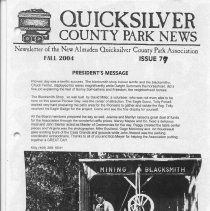
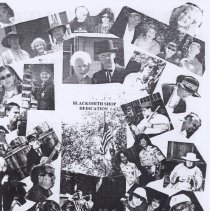
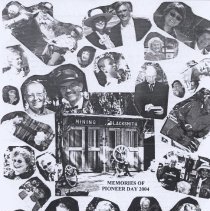
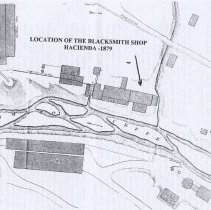
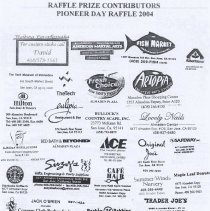
TITLE: Quicksilver County Park News Newsletter of the New Almaden Quicksilver County Park Association FALL 2004ISSUE 77 PRESIDENT'S MESSAGE Pioneer day was a terrific success. The blacksmith shop looked terrific and the blacksmithy, Chuck Ferrier, displayed his wares magnificently while Dwight Summers the horseshoer, did a fine job explaining the feet of Sonny SixFeathers and Freedom, the neighborhood horses. The Blacksmith Shop, so well built by David Miller, a volunteer, who was not even able to be here on this special Pioneer Day, was the center of attraction. The Eagle Scout, Tolly Powell, worked very hard preparing the patio area for the Pioneers to gather and salute the flag. Tolly received his Eagle Badge for the project. Come and see the fine display for yourself. All the Board members prepared the day so well. Jeanne and Marilyn raised a great deal of funds for the Association through the wonderful raffle prizes. Nancy Mapes and Co. fixed a delicious meal and John Slenter acted as Master of Ceremonies for the day. Peggy created the table center pieces and Virginia was the photographer. Mike Boulland, Gage Mckinney and Art Boudreault gave exciting tours of the Casa Grande and grounds while John Atwood was the parking coordinator extraodinaire. Thanks to all of you and Bob Meyer for helping the Association putting together a GREAT DAY. Kitty (408) 268- 6541 BLACKSMITHING AT THE NEW ALMADEN QIUICKSILVER MINING COMPANY This article is based on the talk given by Art Boudreault at Pioneer Day, 2004. Blacksmith shops were very important to the miners in New Almaden. According to Connie Perham, each mine shaft area had its own shop, and there was one at the Hacienda Mine Works as well. In looking through our archives we found several facts about the shops and the people who operated them. Our earliest written evidence of blacksmithing comes from the description of a line drawing, "This early etching shows the six reduction furnaces designed by blacksmith Baker along Alamitos Creek that were completed in 1850. Water from the creek was used to condense liquid mercury from the hot furnace vapors." It was difficult working next to the creek. C. E. Hawley describes a huge rain storm this way. "Nov 27th, 1864: A stern-wheel steamboat could navigate anywhere about the planilla yesterday. One blacksmith rushed out as a torrent broke into the shop and called vociferously for picks and shovels or a lifeboat. Some half dozen houses were blown down and several unroofed. More will meet the same fate tonight for it blows a hurricane." The problems weren't confined to the Hacienda. He also said, -At the village near the America Mine the blacksmith shop at San Pedro. no fires could be kept yesterday. It was the heaviest fall of rain I ever saw." In order to make a hot enough fire, a special coal was used. In 1865 James Butterworth ordered 7 tons of coal for the shop. N. D. Arnot, the mine superintendent, ordered ten tons of blacksmith coal on March 13th 1865, "which we shall want at once." -The boiler and blacksmith's shop was there [Hacienda] (and 1,255 feet long that year). James Champion was in charge with 14 whites, etc. and 10 Chinese. Lower wages were paid than elsewhere in California". In August of 1875 a fire really devastated the Hacienda and reducing plant. In addition, the Almaden Hotel, Adobe Hotel and blacksmith's [shop] burned, but the waterwheel was saved. The company placed a $1,000 reward [about one year's salary for most workers] in order to apprehend the arsonist. The company also purchased a fire engine and installed hydrants at the Hacienda. By 1880, the blacksmith shop at the Hacienda Mine Works was located near the entrance to the mine works area and adjacent to the merge of Deep Gulch Creek and Los Alamitos Creek. From the map made by Henning Jennings in 1879, the blacksmith shop, the carpenter shop and the machine shop were contiguous. At the southern end of the buildings, a huge waterwheel drove the shaft to which various machine were attached for power. A fifteen-inch water pipe brought the water from a dam on the creek. The blacksmith shop was located near the entrance to the mine works area and adjacent to the merge of Deep Gulch Creek and Los Alamitos Creek. In 1884, Hennen Jennings, the superintendent and agent of the Quicksilver Mining Company, appropriated 250 miners' inches of water from the Alamitos Creek. (A miners' inch is about 400 cubic feet per minute.) The water was diverted to a dam located 1,340 feet from the Hacienda Tunnel. The water was then carried to a tank one-half mile down the creek. "A fourteen inch pipe took water out of this tank and carried it to an overshot waterwheel located at the old blacksmith shop. After being used to propel this waterwheel, the water was carried along near the Almaden Road to a point just below the Hacienda School. After leaving the waterwheel, the water was used for domestic purposes, for watering of the livestock and for beautification." The water flowed through a ditch called the acequia, on the east side of Almaden Road The water then flowed through the acequia and returned to the creek after the school house near Bertram Road. J. B. Randol, the mine manager from 1870 to 1982, recognized the value of company-sponsored training. He established technical schools on the hill as well as at the Hacienda. Instruction was given in plain cooking, sewing, carpentry, and blacksmith work. The daily course of instruction was limited to two hours for five days in each week, Saturday being allowed as a holiday. He offered a series of prizes to stimulate the youngsters. In the cooking class, prizes were offered for the best loaf of bread, $5; best roast, $4 best steak, $3; best chops, $2; best rice pudding, $2; best beans, Mexican style, $1. In the dressmaking, blacksmithing, carpentry and mason-work class prizes of $10 were offered and additional prizes of $10 were offered for punctuality, good behavior and continued attendance. Several committees distributed prizes after a careful inspection of the work done by the pupils, the age of the pupil having been taken in consideration. "Altogether the work done by the pupils is very creditable, considering their age and the short term of instruction, and some pupils have shown much intelligence and great aptitude." Among the items that the students learned were "Heating and shaping iron, making bolts, staples, devises, hooks; welding; making links, tempering steel, drilling holes, making washers, and tapping nuts." The Blacksmith school enrolled twenty one pupils, (largest of the schools), and all were present at the end of the term." They were paid $15.75 for their efforts in addition to the prizes for excellence, attendance etc. One item in constant demand was the candleholder. This is described as follows: "The miner's candleholder usually consisted of an iron rod, 1/4 inch square, twisted into a looped handle at one end with a longer point at the other end. On one side near the center was a spring-clip thimble for securely holding the candles. Opposite the clip, rising at right angles to the rod, was a hook. All early one-piece devices were hammered out of a single rod by a blacksmith." So far, we have on record the names of these blacksmiths: Teodoro Aceves, Phillip Bluett, M Broedel, William Bunney, John Henry Drew, John Edwards Charles Eslick, Edward Fowler, Nicholas John Grey, Nicholas Grey, William Grey, John and James Harry, sons of James Harry, William Henderson, Charles Higgins, James Job, Philip H Ralph, Norman Ramsey, John A Rhodes, James Rogers, George Rouse, George Smoot, Elisha Trengove, William Varcoe (?), Edward Wale, Mrs. D. Whelan and Charles A Wright. Blacksmith shop almost a reality Dream becomes a reality If you build it they will come Volunteer effort adds Blacksmith Shop to Almaden Quicksilver Mining Museum "Without the volunteers there would not be a Blacksmith Shop at the museum. "-Kitty Monahan By Jeanne C. Lewis Staff Writer Something exciting is happening at the Almaden Quicksilver Mining Museum. Planned for three years, the blacksmith shop is becoming a reality. The New Almaden Quicksilver County Park Association [NAQCPA) in a group volunteer endeavor have renovated the old carriage house building and now are in the process of arranging the artifacts and finishing the landscaping. They also raised all the necessary funds to create the new mining exhibit. The carriage house operated at Casa Grande from 1856, storing the coaches and equipment needed for the Quicksilver manager's transportation. There were two blacksmith shops in operation during the mining hey-day. One was El Vespero ("evening prayer"), the site of the jail, and now known as house #10 on the New Almaden Walking Tour. The Blacksmith Shop was to the rear of the building attending the oxen, cows and equine. The other was located at the Hacienda near the Randol Shaft. The carriage house, neglected for years, was in a state of disrepair. The first project NAQCPA members undertook was a clean up the area which had been used for storage. Mike Boulland and Damion Pantiga secured a new roof on the structure. Sean Teague, a graduate of Leland High School, built the large doors to earn his Eagle Scout badge, enlisting the assistance of his father and friends. Volunteers installed six by six beams to reinforce the original rustic structure. Chuck Ferrier created the old-world hinges and hasps for closure to the massive entry doors. Other members supported the gateway and completed the exacting install. "Without the volunteers there would not be a Blacksmith Shop at the museum," Kitty Monahan, President of NAQCPA, remarked. "They worked hard and did it all. The association [NAQCPA] financed it with generous donations as we went along. If it wasn't for them, all the artifacts would still be in storage and the carriage house in shambles." Blacksmith equipment was collected and donated for years to the Quicksilver Mining Museum. Many of the artifacts were from the original Mining Museum managed and owned by Connie Perham at the Carson adobe on Almaden Road. Perham was a lifelong collector and had the foresight to collect the rusted equipment and documents from the Almaden Quicksilver Mines realizing their historic value. Perham even had a blacksmith area in the museum she operated from 1949 to 1983. In 1984, Santa Clara County Parks and Recreation Department purchased the memorabilia from Perham. Blacksmith/Lewis David Miller, NAQCPA member, worked many morning hours, shoring up the building, leveling the floor, replacing the aged windows, and arranging the heavy anvils, bellows, tongs and forges in an attractive display. And it was on a need to know basis Miller relates. He knew zilch about blacksmithing, before he began the endeavor. "I was hiking and stopped by the museum one day and met Kitty," Miller said as he wiped his brow in the hot morning sun. -And the next thing I know I'm doing this. My wife works and I'm retired so I like to keep busy." The large entrance to the shop needed to be landscaped and Tolle Powell volunteered to earn his Eagle Scout badge. Powell organized Dale Buurma, Isaac Tysanner and their parents to assist. Even the scout leader came to help. The enterprising high school freshman raised funds from the Elk's Club.-Powell and his team designed the area, graded the land, prepared a trench for irrigation, planted an oak tree and layered decomposed granite on the outside entrance to the Blacksmith Shop. "I came to the museum in the seventh grade," Dale Buurma said preparing the ground with a rake after a fracas ensued regarding a black widow spider found in the corner of the building. -So when I heard about this happening, I had to come back.- Miller has arranged the inside of the blacksmith shop in remembrance of another time. An aging yellow advertisement from the 1850's boasts bellows for $6 and wheel tightners for $7. An old wagon that was resting on Alamitos Creek shoreline sits to one side of the building. Chains, wagon wheels and saws hang from the wooden fence. Miller digs a hole for a hitching post. You can almost visualize horses waiting to be shod. The flood of activity continues and because of the NAQCPA volunteers; a lot of sweat equity, ingenuity, donations and the desire to leave a historical exhibit for future generations, the blacksmith shop is becoming a reality at the Almaden Quicksilver Mining Museum. It will open sometime in October for public viewing. |
People |
Aceves, Teodoro (Theodore) (Acevez, Teodoro) Arnot, N.D. Atwood, John Bluett, Phillip Broedel, M. Bunney, William H. Champion, James Drew, John Henry Edwards, John (Johnnie) Eslick, Charles Ferrier, Chuck Fowler, Edward Grey, Nicholas John (Grey, Nicholas) Grey, William (Grey, William Captain) Harry, James (Captain, Jr.) Harry, John Hawley, Christopher E. (C.E.) Henderson, William Higgins, Charles Jennings, Hennen Job, James Ralph, Philip H. Ramsey, Norman Rhodes, John A. Rogers, James Rouse, George Smoot, George Summers, Dwight Trengove, Elisha Varcoe, William Wale, Edward Whelan, D. Wright, Charles A. |
Cataloged by |
Meyer, Bob |
Collection |
Perham 2 |