
Archive Record
Images
Additional Images [13]

Metadata
Catalog number |
1997.2.2651 |
Object Name |
Newsletter |
Date |
2005 |
Description |
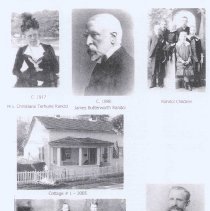
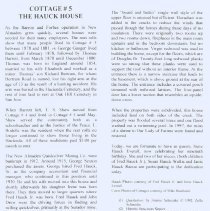
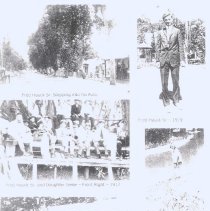
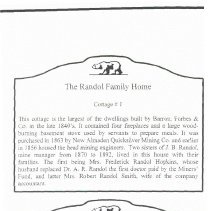
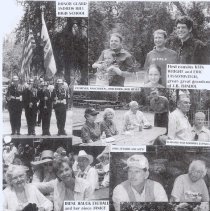
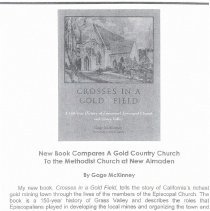
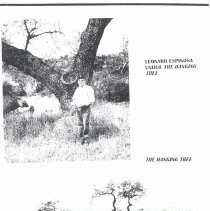
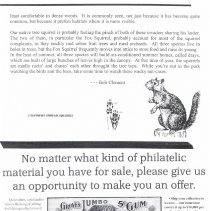
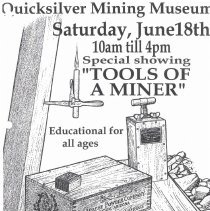
TITLE: Quicksilver County Park News Newsletter of the New Almaden Quicksilver County Park Association PUBLISHER: NAQCPA SPRING 2005ISSUE 79 PRESIDENT'S MESSAGE Your organization is certainly thriving. We have been active with the dedication of two houses in New Almaden, researching for information on ancestors of the mining days and preparing a new project for the Eagle Scouts. This last project is the building of a cover for the map desk that was up in Englishtown from 1940 until we brought it down to the Perham Museum in 1985. Since we moved to the Casa Grande, this large map desk has had no home. This year, we will give it a home. If the rain quits the adopt a trail crew will get back to work. Our first work day will be Wednesday, May 25. The crew leaves from the Museum at 9am on the second and fourth Wednesdays, drives in the Volunteer van to our work spot and returns by 12noon. Come get some exercise and help us enhance the trails in Quicksilver Park. Guide to Wildflowers On May 5, 2005 we did a wildflower Scavenger Hunt at the McAbee entrance of the Quicksilver Park for the Santa Clara County Parks Department's new program, Almaden Quicksilver the Outdoor Recreation Program. This County Park was a very successful first program for this new concept in the department. A count of 100 persons of all ages participated in the search for wildflowers from the clues that were given. It was great fun. Have a great Spring. Kitty 268-6541 COME SEE THE MUSEUM AND BUY THE WILDFLOWER BOOK Cottage Monument Dedications New Almaden Mining Museum Dedication Randol & Hauck cottage historical interpretive monuments Noon, Sunday, May 15, 2005 Monuments & Program Sponsored By: The Harry & Buffy Wellman Family Mike & Dorene Bolluand The New Almaden Quicksilver County Park Association MOUNTAIN CHARLIE CHAPTER 1850. E. CLAMPUS VITUS "RIGHT WRONGS NOBODY" MONUMENT DEDICATION - May 15, 2005 Cottage # 1, THE RANDOL FAMILY HOME and Cottage # 5, THE HAUCK HOUSE By Art Boudreault On this momentous occasion, E. Clampus Vitus, New Almaden Quicksilver County Park Association, New Almaden Community Club and the homeowners of cottages # 1 and # 5 proudly dedicated historical monuments to commemorate the importance of these homes in the history of New Almaden. These are the 13th and 14th monuments that have been added to the New Almaden Historic district since 1979 by the E Clampus Vitas Society. Many homes along Los Alamitos Creek were built to accommodate the living needs of the workers and management of Barron, Forbes and Company, New Almaden Mining Company and New Almaden Quicksilver Mining Company. Included in the construction was a brick sidewalk that went from the tollgate house to the Hacienda School, which was just north of Bertram Road and a drainage ditch called an acequia. The sidewalk allowed the children to walk to school without getting muddy. Bricks were from many locations, since they were originally used as ballast. The acequia provided water for cleaning and watering cottage gardens. In 1845, Andres Castillero, a Mexican Cavalry Officer, made the first claim against the mining rights to the Capitancillos Ridge. His claim was broad enough to include part of the valley floor, now known as the Hacienda. He hired William Chard to work the mine and proceeded to build several adobe houses near the mine works. According to Schneider, (1) there were already two homes in the area built around 1842, prior to the arrival of Castillero. Barron, Forbes and Company purchased Castillero's claim in the fall of 1846 and began an expansion of the mines for the next 14 years. While miners were digging and other workers were roasting ore, many houses were being built along Los Alamitos Creek, first the adobes and then the wooden structures. COTTAGE # 1 RANDOL FAMILY HOME Except for the Casa Grande itself, cottage # 1 is the largest of the homes at the Hacienda. It is a nine room house with a full basement. The basement contained a stove that ran the entire width of the house and a dumbwaiter to transport food to the scullery and dining room above. It is constructed of wood with brick basement walls. The Santa Clara County Historic Structures report calls this house "The Head Mining Engineer's House". (2) Charlene Duval, in her recent draft report to Santa Clara County, says, " It is best known as the head mining engineer's house and appears to date to the mid 1850's... and may have been lived in by the second in command of the company or by the mine manager when the Casa Grande was leased out to other persons.... The Quicksilver Mining Company, which took ownership of New Almaden in 1863, did not include this house in the rent roll of 1865 - 1868, perhaps because the building was not used as a residence or it was being used by upper management." Charlene also reports that Francis Meyers, who was a carpenter on the mine payroll for many years, built this house as well as the Casa Grande. It was already known as cottage # 1 when Col. Von Leicht drew the Hacienda map in 1880. (3). In the late 1860's James Butterworth, mine manager from 1863 to 1870, moved to his home in San Francisco and leased the Casa Grande to F. A. L. Pioche. Shortly after Butterworth's retirement in 1870, Pioche went bankrupt and lost his lease. It is at this point that we believe that J. B. Randol moved into cottage # 1 while he remodeled the Casa Grande for his extended family. Shortly afterwards, he hired his brother, Dr. A. R. Randol, to be the resident doctor. He worked for and was paid through the newly established Miners' Fund. We believe that Dr. Randol lived in this house. In January 1878, Dr. Frederick Vincent Hopkins, who replaced Dr. Randol as the resident doctor, was living in the house rent-free. (4) Dr. Hopkins was the son of a prominent Episcopal minister who founded the Episcopal diocese in Vermont. Dr. Hopkins was born in Burlington, Vermont on May 23, 1839.4 He was a surgeon and professor of geology at Louisiana State University and in charge of the geological survey for that state from 1868 until 1874. He was the surgeon at New Almaden and the Sulphur Bank quicksilver mine from 1876 to1882. He originated a method of killing the bacilli of tuberculosis and leprosy by half-inch sparks from a Ruhmkorff coil. Jimmie Schneider reports that the doctor married a sister-in-law of J. B. Randol, but we have been unable to establish this independently. (5) When Dr. Hopkins left New Almaden in April 1878, Robert Burnett Smith was hired as the company accountant and resided here with his family. Smith was married to Annie Terhune, sister of J. B. Randol's wife Christiana Terhune. This house, along with all the others on the company property, remained company property through its bankruptcy in 1912. George Sexton bought the company's assets in 1915. After his death in 1926, Sexton's heirs subdivided the area and had sold the homes by 1930. The current owners, Harry and Buffy Wellman, now call this cottage the "Randol Family Home" because many members of the Randol Family lived there over the years. We are fortunate today to have several descendants of the Randol family here to celebrate this event, including Kian Wright and Eric Lassotovitch, first cousins and both great-great grandsons of J. B. Randol. Randol Family photos courtesy of Harper Wright, Randol family historian. COTTAGE # 5 THE HAUCK HOUSE As the Barron and Forbes operation in New Almaden grew quickly, several houses were needed for their many employees. The rent rolls show that many people lived in Cottage # 5 between 1878 and 1881. 4) George Gauger lived there until February 1878, followed by Thomas Barrett., from March 1878 until December 1880. Thomas was born in England around 1854, married -to his wife Elizabeth and worked as a miner. Thomas' son Richard Bertram, for whom Bertram Road is named, lost his right arm at the age of 13 as the result of a hunting accident, His arm was buried in the Hacienda Cemetery, and the rest of him laid to rest at Oak Hill Cemetery in. San Jose. When Barrett left, F. S. Shaw moved from Cottage # 4 and lived in Cottage 5 until May. Shaw served the community both as a schoolteacher and as the Justice of the Peace. L. Bodelle was the resident when the rent rolls no longer continued to show those living in the Hacienda. All of these residents paid $5.00 per month in rent. The New .Almaden Quicksilver Mining Co. went bankrupt in 1912. Around 1915, George Sexton purchased the assets. George hired Fred Hauck, Sr. as the company accountant and financial manager, who continued in this position until 1930. He and his wife moved into this house and shortly afterwards his daughter Irene was born there. They then moved to larger quarters where Fred Hauck. Jr. was born. Fred Hauck and John Drew were the driving forces in finding and selling quicksilver, primarily at the Senador mine. Because this mine was much closer to civilization, both moved to San Jose and commuted .down Almaden and McAbee Roads to work each day. Around 1955, the Ryan family purchased Cottage # 5. Mr. Ryan was born on the hill during the mining era. When he and his wife died, their son John. a Catholic priest, used it for his summer home. Mike and Dorene Hand, who purchased this home in 1996, have actively and lovingly restored it. Cottage 5 is built with a brick basement and foundation. The outside walls are 16 inches thick and the interior walls 12 inches. The bricks are mortared with Portland cement, which was also used in construction of the Casa Grande. 6 The "board and battin" single wall style of the upper floor is unusual but efficient. Horsehair was added in the cracks to reduce the winds that passed though the homes during those days of no insulation. There were originally two rooms up and two rooms down_ fireplaces in the main room upstairs and in the bedroom downstairs, but no kitchen or bathroom. Virgin redwood was used in building the home, except for the floors, which are of Douglas fir. Twenty-foot long redwood planks were so strong that these planks were used to support the roof without an interior frame. At the entrance there is a narrow staircase that leads to the basement, which is above ground at the rear of the home. The entrance includes a covered porch trimmed with redwood lattices. The four-panel door has a lower section that resembles an upside down cross. When the properties were subdivided, this house included land on both sides of the creek. The property was flooded several times and one flood washed out a swimming pool. In 1997, the ruins of a shrine to Our Lady of Fatima were found and restored. Today, we are fortunate to have -as guests, Irene Hauck Everall, now celebrating her ninetieth birthday. She and two of her nieces, (both children of Fred Hauck Jr.), Susan Hauck Wallis and Janis Hauck Ranoa are participating in the dedication today. Hauck. Photos courtesy of Fred Hauck Jr. and Irene Hauck overall Cover Photos or-Cottages courtesy or- Mike Boulland, Quicksilver, Jimmie Schneider .1992, Schneider_ (2) Historic Structures Report 131 Map of the Hacienda. by Supt. Von Leicht - 1880 (4) Rent Roll January 1878 -- June 1881. (5) Photo of Ed Hopkins.son of F V. Hopkins) (1999001-014) The Randol Family Home Cottage # 1 This cottage is the largest of the dwellings built by Barron, Forbes & Co. in the late 1840's. It contained four fireplaces and a large wood-burning basement stove used by servants to prepare meals. It was purchased in 1863 by New Almaden Quicksilver Mining Co. and earlier in 1856 housed the head mining engineers. Two sisters of J. B. Randol, mine manager from 1870 to 1892, lived in this house with their families. The first being Mrs. Frederick Randol Hopkins, whose husband replaced Dr. A. R. Randol the first doctor paid by the Miners' Fund, and latter Mrs. Robert Randol Smith, wife of the company accountant. The Hauck House Built by Barron, Forbes & Company in the late 1840's this cottage is one of several houses with a brick basement. Known mine workers who rented this house include William Flemming, John Marr, George Casa Nuestra or Cottage # 5 Ganger, and Thomas Barrett. Theodore S. Shaw, a schoolteacher and Justice of the Peace also lived here, as well as Fred P. Hauck, Sr., who worked for the New Almaden Company from 1915 - 1930 as the company clerk. The brick sidewalk was constructed so that children could walk to Hacienda School without muddying their shoes. New Book Compares A Gold Country Church To the Methodist Church at New Almaden By Gage McKinney My new book, Crosses in a Gold Field, tells the story of California's richest gold mining town through the lives of the members of the Episcopal Church. The book is a 150-year history of Grass Valley and describes the roles that Episcopalians played in developing the local mines and organizing the town and its institutions. I was glad when the Emmanuel Episcopal Church asked me to write the book, which became part of their sesquicentennial celebration. For me the subject offered an interesting comparison to the Methodist Church at New Almaden, which I described in an earlier book titled A High & Holy Place: A Mining Camp Church at New Almaden. In the latest book, I was able to draw on the earlier one to compare and contrast the establishment of Methodist and Episcopal churches in the early days of California. I was also able to write about families that lived at both New Almaden and Grass Valley, such as the Drew and Harry families. I explained why many of the Methodist families also had an affiliation with the Episcopal Church both in Grass Valley and San Jose. Beyond that, Crosses in a Gold Field describes the founding of the Episcopal Church in California, especially through the life of the first missionary bishop to the Far West, the Rt. Rev. William Ingraham Kip. He was a polished, well-born Easterner who learned to rough it among the pioneers. He helped to establish many churches, including Trinity in San Jose and St. Luke's in Los Gatos. The book is rich with the personal stories of God's faithful in the Golden State. It tells the story of the Episcopalians who discovered gold in Grass Valley and who helped to develop Nevada's fabulous Comstock Lode. it tells of the women who supported the church and in the 1870s organized Grass Valley's Ladies Relief Society, a private charity that is still helping the needy today. Crosses in a Gold Field: A 150-year History of Emmanuel Episcopal Church and Grass Valley was published by Emmanuel Episcopal Church and produced by Comstock Bonanza Press for a limited printing of 500 copies. The large format book runs 148 pages and includes 80 illustrations. It is available for shipment from The Book Seller, 107 Mill Street, Grass Valley, telephone (530) 272-2131; e-mail: booksqvpacbell net. My earlier book, A High & Holy Place, is available at the New Almaden Museum. The Hanging Tree By: Leonard Espinosa Stories about life at the New Almaden Mines abound in my family. An example is the story of the "Hanging Tree." About 60 years ago, my dad and I were walking on the Mine Hill to Guadalupe Road when my dad pointed to a tree and said, "That's the hanging tree". He went on to say that in the late 1800's a man raped (or killed) a girl, was caught and then hung on that tree. After that, when a person walked past the tree it was customary to toss a small rock under the tree. In March of 2005 my son Leland and I hiked to Mine Hill for our annual tour of our ancestors' home. This time we decided to look for the Hanging Tree. I had a strong feeling for the location of the tree as it was a piece of New Almaden lore I couldn't forget. As we walked south on the Mine Hill - Guadalupe Road, just north of the Rotary Furnace my son said, "Look at that tree. It looks like a perfect tree to hang someone from." We walked to the tree and after close inspection I am 99.9% sure that it is the tree my dad showed me 60 years before. The photo shows the tree. It is about 1/8 mile north of the rotary furnace. My dad, Jack Espinosa, his father Luis Espinosa and his grandfather Leandro Espinosa were all miners on the New Almaden. I also helped my dad mine when I could. Leandro worked for the company for about 40 years, my dad was an independent miner with his own retort for processing the cinnabar into mercury prior to W.W.II. He worked for the mining company during W.W.II and returned to independent mining on the New Almaden after W.W.II. His last mining was done at the Senador Mine in about 1954. My father's mother, Isabel Acevedo Espinosa, was born in Spanish Camp on the hill in 1878. Her family, the Acevedo's plus other branches of the family worked for the mine. The men performed various mining jobs such as driving the ore wagon from the hill down to the furnace yard. Her mother was a cook at the Casa Grande, her aunt worked in one of the boarding houses, and my grandmother raised her family, cleaned the mine office, worked in the kitchen at the Casa Grande and in her spare time cleaned the church. We have many buried in the Guadalupe Cemetery on Mine Hill and I have one uncle buried in the cemetery in the Hacienda. Our family's history is deeply entrenched in New Almaden. We grew up hearing stories, seeing pictures, and in my case recording stories of the old times. We visited old timers during the 30's and 40's and visited the cemetery on the hill. New Almaden is in our blood. Nut-cases Romp In The Park No, your neighbor's kids haven't taken over the park, but some high-strung rodents are zooming around the park in anticipation of enjoying the annual rites of spring. The Quicksilver Park is home to many unusual plants and animals. Many of the insects and other small invertebrates seem strange mostly because we don't know much about them. However, even some fairly common and seemingly well-known critters can at times be a little squirrelly. In fact, some of them are squirrels. If you've seen one squirrel, you haven't seen them all. There are probably four species of squirrels living in and around the park. All of them may spend some time in the trees but only three of them normally live in the trees. Most of us are pretty familiar with the California Ground Squirrel. Even though it can and does climb trees quite well, it spends most of its time on the ground and lives in a burrow. Unfortunately, these guys have never heard that two's company and three's a crowd. Lots of ground squirrels means lots of burrows. Not that bad in the park but not so good around your house. Largely vegetarian, they will, however, eat some insects and bird eggs. Even the flesh of a road-killed companion may add protein to their diet. The other three species include one native and two aliens. The Western Grey Squirrel is a handsome chap with a white tummy and a silvery-grey coat. Trailing behind is a fabulous bushy tail that looks likes its been frosted and blow-dried by the local hair stylist. These squirrels are usually sparsely scattered through the woods, and despite their eye-catching appearance are rather shy and reclusive. Sometimes not seen, but frequently heard, they alert the other forest residents with loud cough-like barks. Like all squirrels, acorns and other nuts are staples of their diet, but truffles, insects and the occasional egg or fledling bird is also welcomed. The Eastern Grey Squirrel looks somewhat similar but is a little smaller and is not as brightly marked. The tail is not as bushy and usually shows quite a bit of brown. Frequently the sides of the animal show quite a bit of brown also. Many populations of these eastern squirrels have many members that are jet black. Because of this exotic appearance, they were brought west and released in city parks in many large cities. Someone forgot to tell them to stay in those parks and they have spread through neighborhoods and into the woods a long ways from their points of release. Although they prefer more open woodlands, they have become competitors of our native grey squirrel. The other alien, the Fox Squirrel, is native to the east and midwest. It is a heavily hunted species over much of its natural range and may have been brought here for that purpose by some people. However, it also has populations in which melanistic (black) individuals are very common, and like the eastern grey, people took a fancy to it and brought it out west to put in their city parks too. Not too be outdone by the other squirrels, this one has spread very rapidly. It has more color phases than the others and orange-brown, yellow-brown, grey-brown and black youngsters can all occur in the same litter. Although all three of these tree squirrels have similar diets, this is probably the squirrel that most people would visualize planting acorns in the lawn. It is the least comfortable in dense woods. It is commonly seen, not just because it has become quite common, but because it prefers habitats where it is more visible. Our native tree squirrel is probably feeling the pinch of both of these invaders sharing his larder. The two of them, in particular the Fox Squirrel, probably account for most of the squirrel complaints, as they readily raid urban fruit trees and rural orchards. All three species live in holes in trees, but the Fox Squirrel frequently moves into attics to store food and raise its young. In the heat of summer, all three species will build air-conditioned summer homes, called drays, which are built of large bunches of leaves high in the canopy. At this time of year, the squirrels are madly racin' and chasin' each other through the tree tops. While you're out in the park watching the birds and the bees, take some time to watch these wacky nut-cases. - - Bob Clement No matter what kind of philatelic matcrial you have for sale, please give us an opportunity to make you an offer. Quite often, a philatelist who is thinking of selling his lifelong collection will look it over and think to himself, "I wish I could find a buyer who would purchase ALL of my various holdings, and not just the most important material." if this is you, please consider Dr. Bob Friedman. For over 30 years many thousands of good people have placed their trust in us when it was time to sell. We will buy it all!. You'll not only appreciate our friendly, personal way of doing business, but you can place your confidence in someone who has an established worldwide reputation for integrity. Our relationships are personal and confidential between you and Bob Friedman himself and 95% of our offers for. Ship your collection to us now -our insurance covers it up to $10,000 per package if you let us know in advance of sending. Dr. Bob will send you his check for his best offer within. 24 hours. Cash it or return it. The amount will be larger than Dr. Bob's offer if he traveled to your location because he'll save the time and travel costs. Or He'll travel to you. No heavy lifting, no headaches, no need to pack and ship. Dr. Bob can often come to you, give you a check, then pack and move your collections right away for shipment. Quick Payment. No waiting. When you accept Dr. Bob's offer during his visit, he'll give you cash or a cashier's check on the spot. Dr. Bob Friedman will buy practically anything philatelic-from entire carloads of collections and accumulations to colorful covers from decades ago. ENGLISHTOWN SCHOOLHOUSE 1864 An Elementary School was established on the Hill in 1864 the building was erected on a site overlooking the town center. This drawing depicts the school in its early years. For over forty years, it served the educational needs of the young population. As the years went by fencing and landscaping was completed. Many of the miners had received little formal education while growing up. They were highly enthusiastic in seeing their children receiving an adequate introduction to the school curriculum. The total education consisted of grades one through eight. For some of the graduates who had the interest and aptitude, J. B. Randol sponsored a technical program to further prepare the student who was about to become a worker. The boys were offered vocational training in carpentry, blacksmithing and general mechanics. The girls were given classes in cooking and sewing. The Hill school employed four teachers, one of whom was the principle. The school enrollment was at its greatest during the 1880's. In 1886, 253 students were in attendance. School teachers in the average mining camp were the more rugged and adventuresome type, and their manner of strictness was necessary to survive. The control of the classroom was a strict disciplinary procedure and it was not uncommon to observe the ever conspicuous strap to better impress on the students who was in charge. Adequate books and supplies were furnished to the students who were responsible for loss or damage. Life was not dull for the children of the miners. Young people were indoctrinated at an early age in assuming certain responsibilities. Boys took care of the wood supply and, in some cases, milked a cow, raised rabbits or took care of the chickens. The girls, in their early years, became proficient in all areas of cooking, sewing and general housework. The company built the school and most of the homes for the miners. -The houses varied in size from four to eight rooms and the rental charge was from $2 to $9 a month. The houses were available only to employees and their families . There was a small number who built their own houses and paid a ground fee of 50 cents a month. Many of the homes were enclosed with white picket fences and colorful gardens. In the early years people had to transport their own water or patronize a delivery service in which water was delivered in small barrels attached to burros, Quicksilver Mining Museum Saturday, June 18th 10am till 4pm Special show "TOOLs OF A MINER" Educational for all ages For more information please call the museum 408 323 1107 Call of the Cougar by John Dorrance A mountain lion is a silent runner because of its retractable claws. These predators have tremendous leaping power, because their hind legs are longer than the forelegs. A mountain lion can leap 18 feet in one jump. The tail is used for balance. In its nightly wanderings, a mountain lion can cover much ground, 10 miles and more. This big cat walks on its toes, rather than its soles. Mountain lions make a variety of cat sounds. They growl, purr, hiss and meow. When displeased, they make a spitting or coughing noise. The animal can also softly whistle. One unique sound, however, distinguishes the mountain lion from all other cats in the Felidae family. The mountain lion can scream. It is a high-pitched, long, wailing scream -- variously described as "wild and terrifying...like a woman screaming in pain." The vocalization begins in a low tone. It gradually becomes louder and higher pitched, coming to an end when it lowers again. Hunters have reported that a mountain lion's scream can be heard from at least a mile away. The reasons why mountain lions scream is still a matter of scientific speculation and debate. Experts believe that different tones and intensities of a cougar's cry are used for different purposes. One theory suggests that female mountain lions scream to attract mates. Baby mountain lions meow like domestic kittens, as well as purr. An adult mountain lion purrs about twenty times louder than your average household tabby. Along with all other cats, mountain lions purr when contented. Yet until recently, exactly how mountain lions and other cats managed to purr was a mystery. If you try to purr continuously like a mountain lion, you'll quickly discover its impossible for you to do. When you hold a purring tabby, the animal seems to vibrate all over for as long as it remains happy. Scientists first thought that cats might possess a special "purring organ." But none has been found. Then by pressing a microphone against different places on a happy cat's body, researchers discovered that the greatest vibrations originated at the cat's throat, right over its larynx, commonly called the voice box. They correctly guessed that the purring must be coming from the cat's voice box. But then, why can't we purr? asked the scientists. After all, human beings have voice boxes too. More research finally uncovered the answer. Indeed, the mountain lion, along with other cats, possesses something we don't. In its brain is a special timer. This timer can send rhythmic nerve messages -- at 25 electrical pulses per second -- to a particular muscle in the cougar's voice box. With the first pulse from the brain's timer, the muscle swings the vocal folds in the larynx together. It almost closes off the air passage through the voice box. With the next pulse, the muscle relaxes. The airway again opens. These opening and closing folds change the airflow through the cat's voice box. The airflow is usually steady as the mountain lion inhales and exhales. When the timer's working this steady stream turns into a putt-putt-putt of air through the larynx. What does this putt putt putt sound like? Purrrrrr. |
People |
Butterworth, James Dorrance, John Espinosa, Acevedo Espinosa, Isabel Espinosa, Jack Espinosa, Leandro Espinosa, Luis (Louis) Hopkins, Frederick Vincent (Dr.) Meyers, Francis Pioche, F.L.A. Randol, A. R. (Dr.) Sexton, George H. Smith, Robert Burnett Von Leicht, F. |
Cataloged by |
Meyer, Bob |
Collection |
Perham 2 |